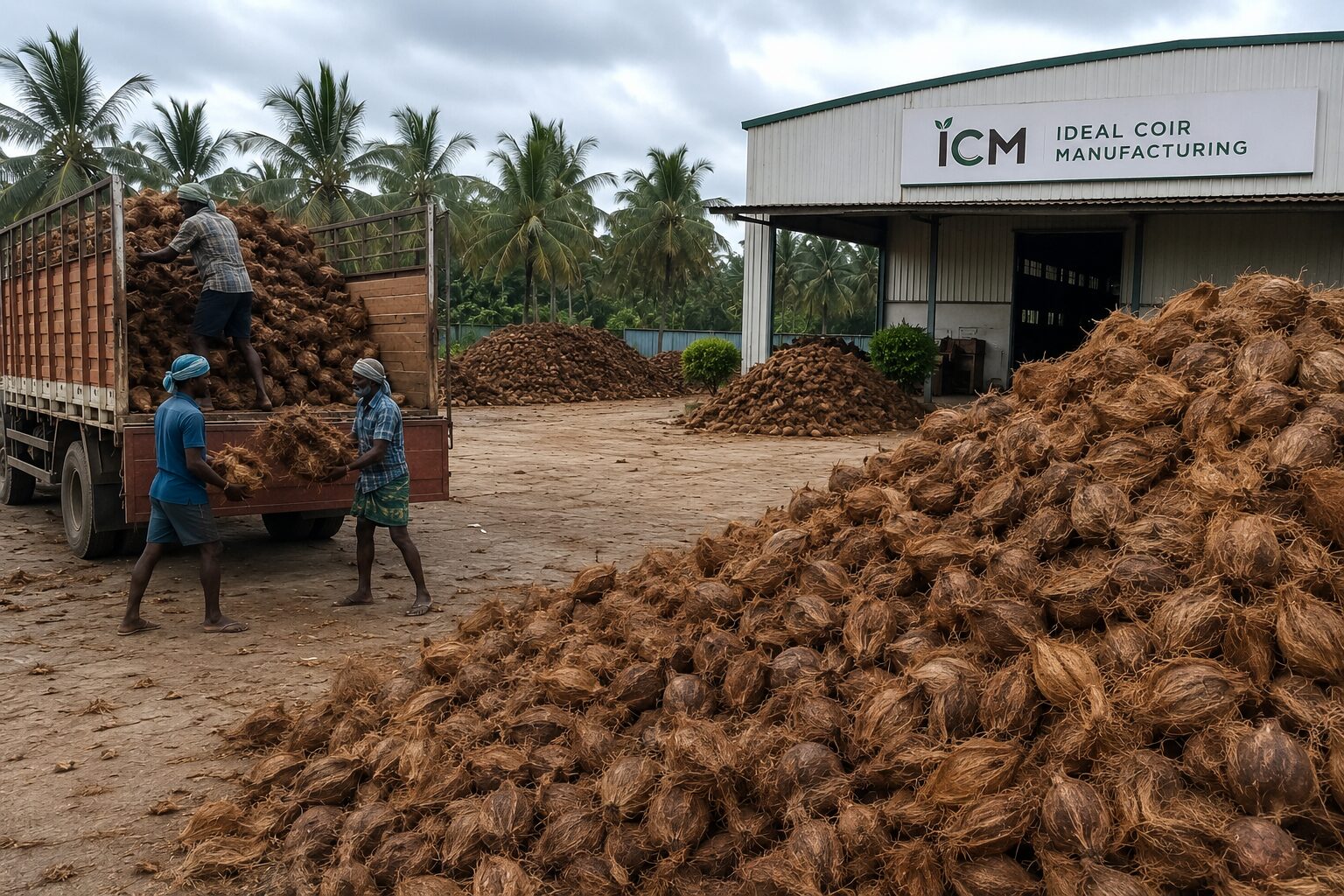
Raw Material Procurement
Production begins with sourcing coconut husk from established regional suppliers. The husk is cured over several weeks before the fibre and pith are separated and graded, so only good-quality raw material moves into processing.
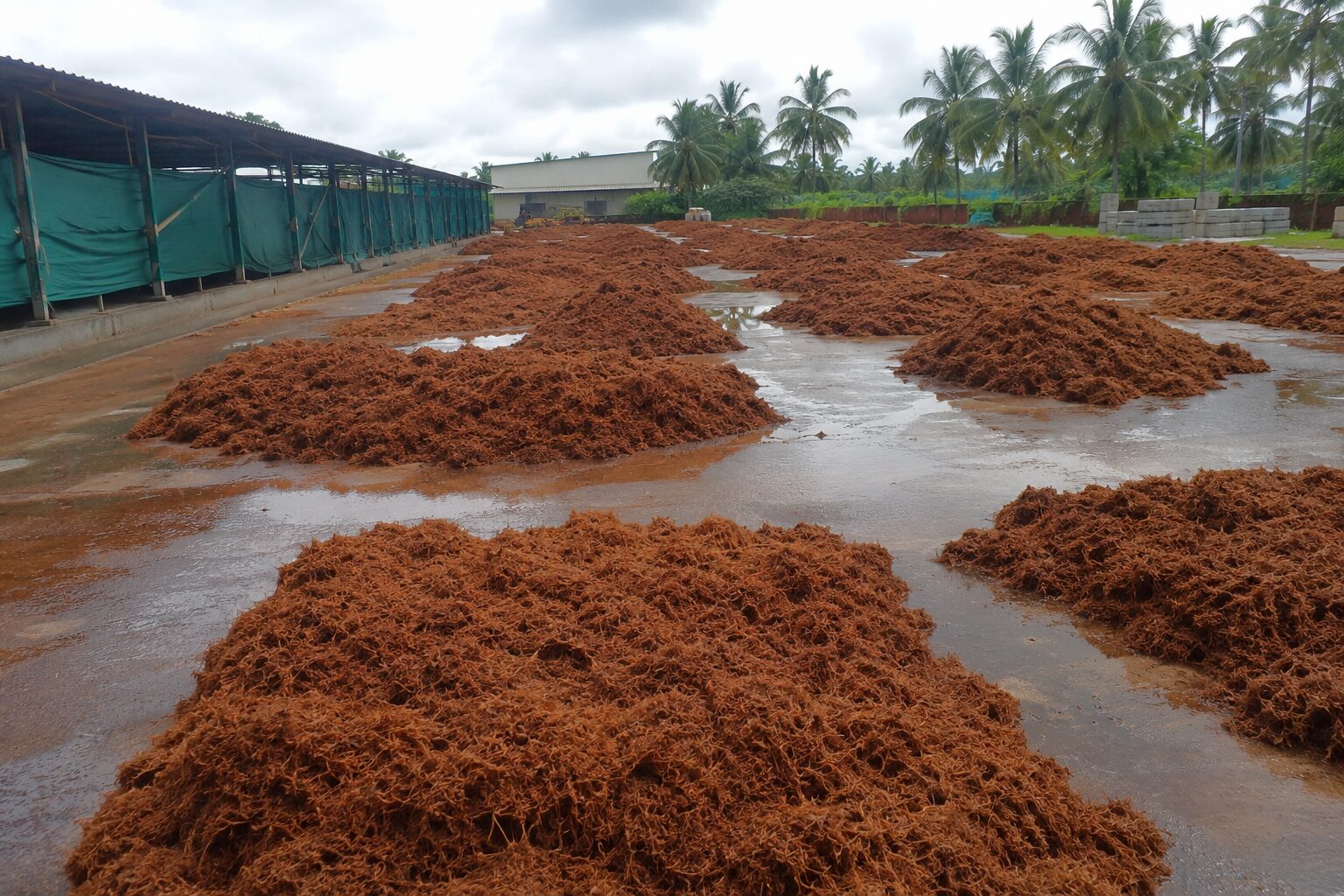
Washing & Aging
Graded coco pith is aged on clean, weed-free floors for an extended period, allowing natural rainwater and fresh-water washing to reduce excess salts and bring the pith closer to a neutral pH and target EC level.
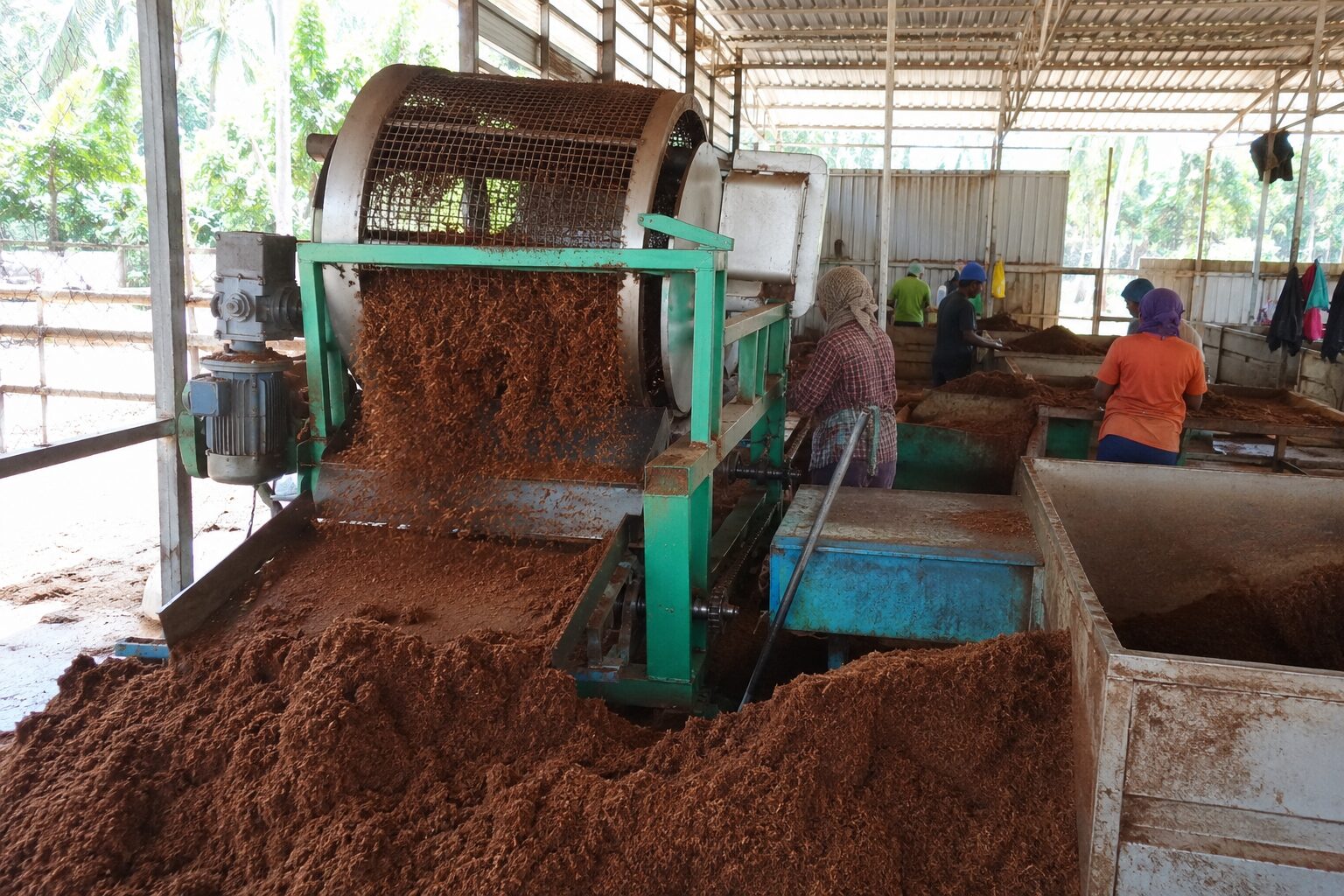
Screening & Sieving
Washed pith is checked for pH, EC and salt content, then passed through sieving to remove fibre chunks and other impurities, producing a consistent particle size before drying.
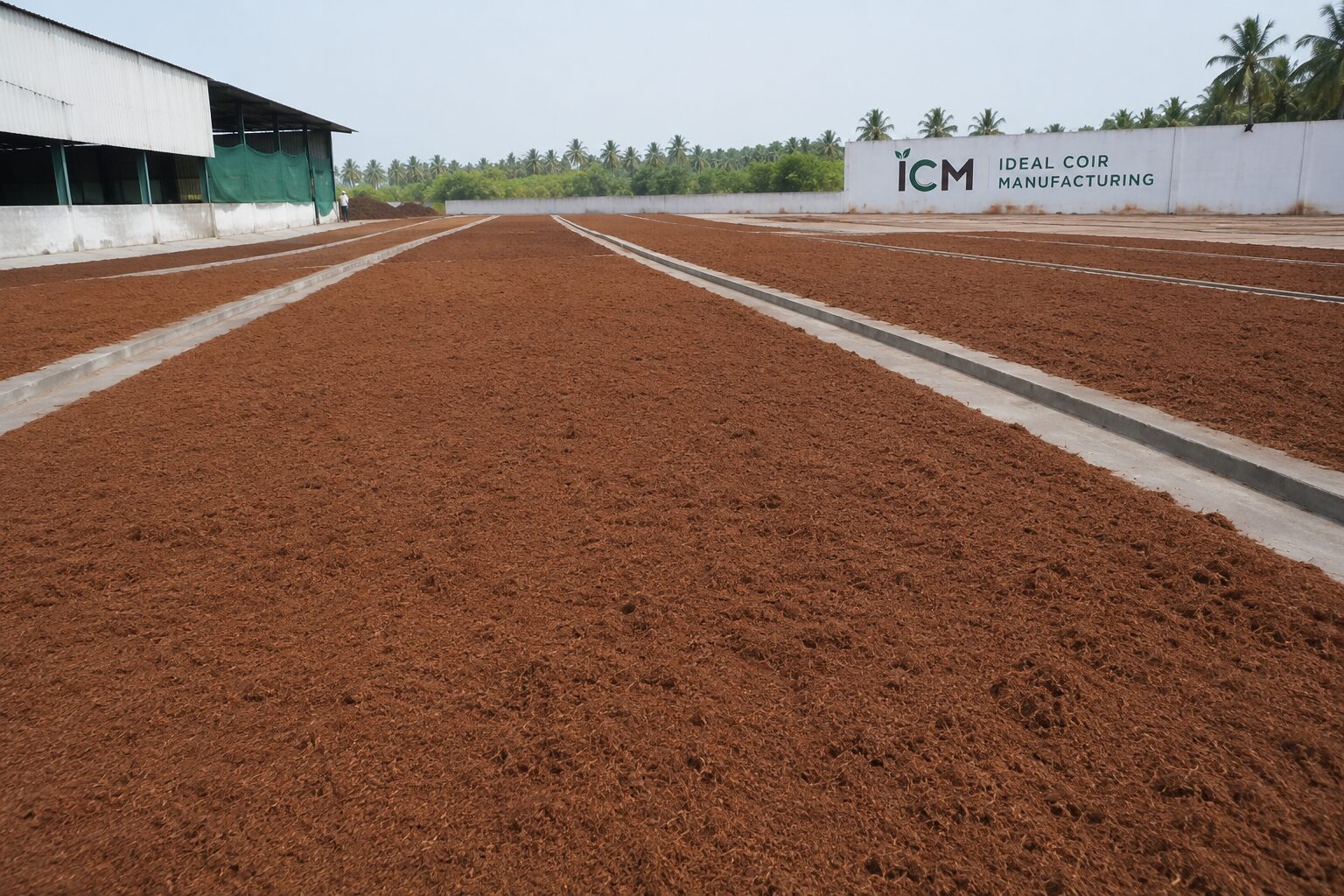
Drying
Sieved coco pith is sun-dried on open floors until moisture content is brought down to the required level, preparing the material for final screening and compression.
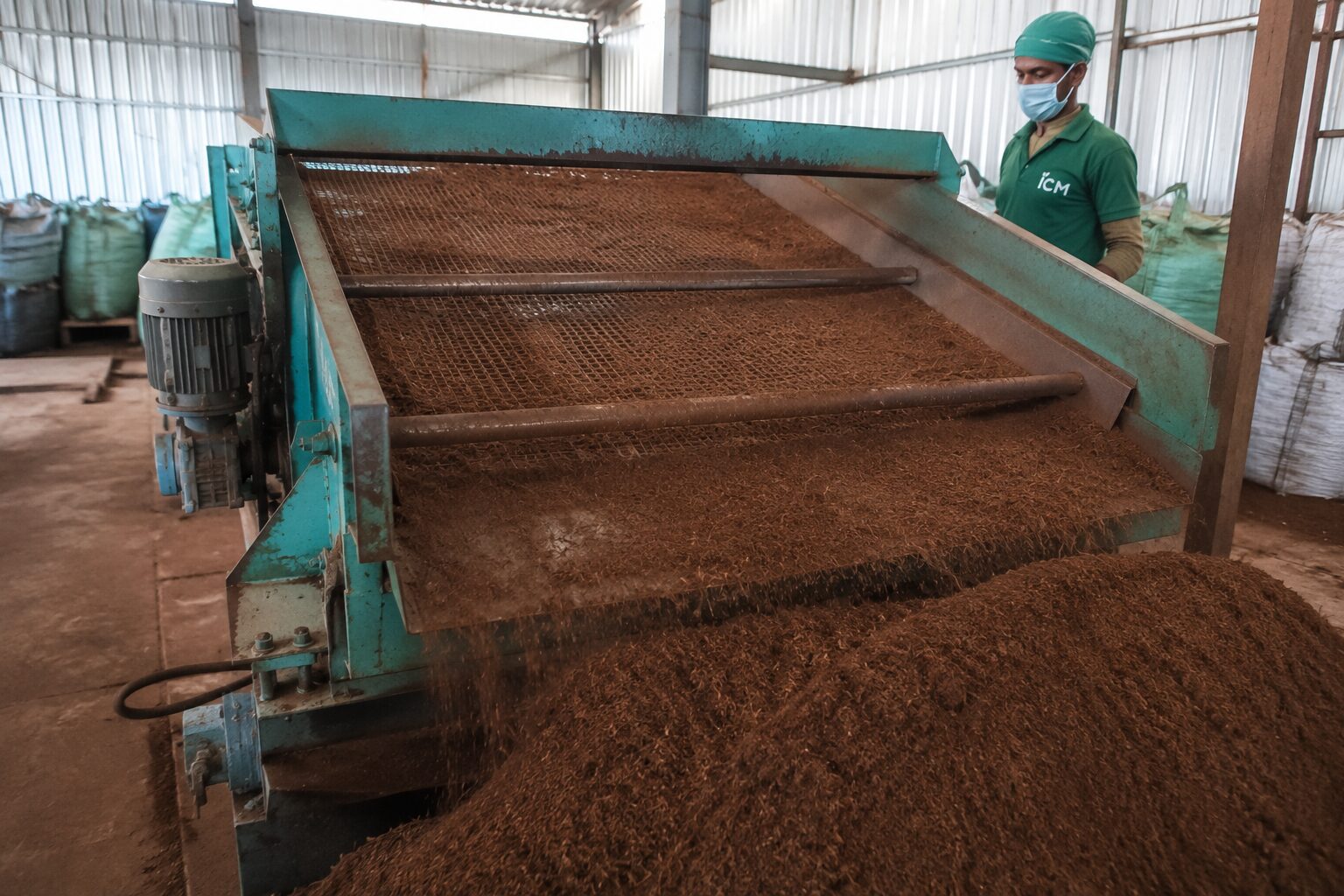
Final Screening
A final round of screening removes any remaining sand, husk fragments or impurities, so the material meets the consistency expected by horticulture and export buyers.
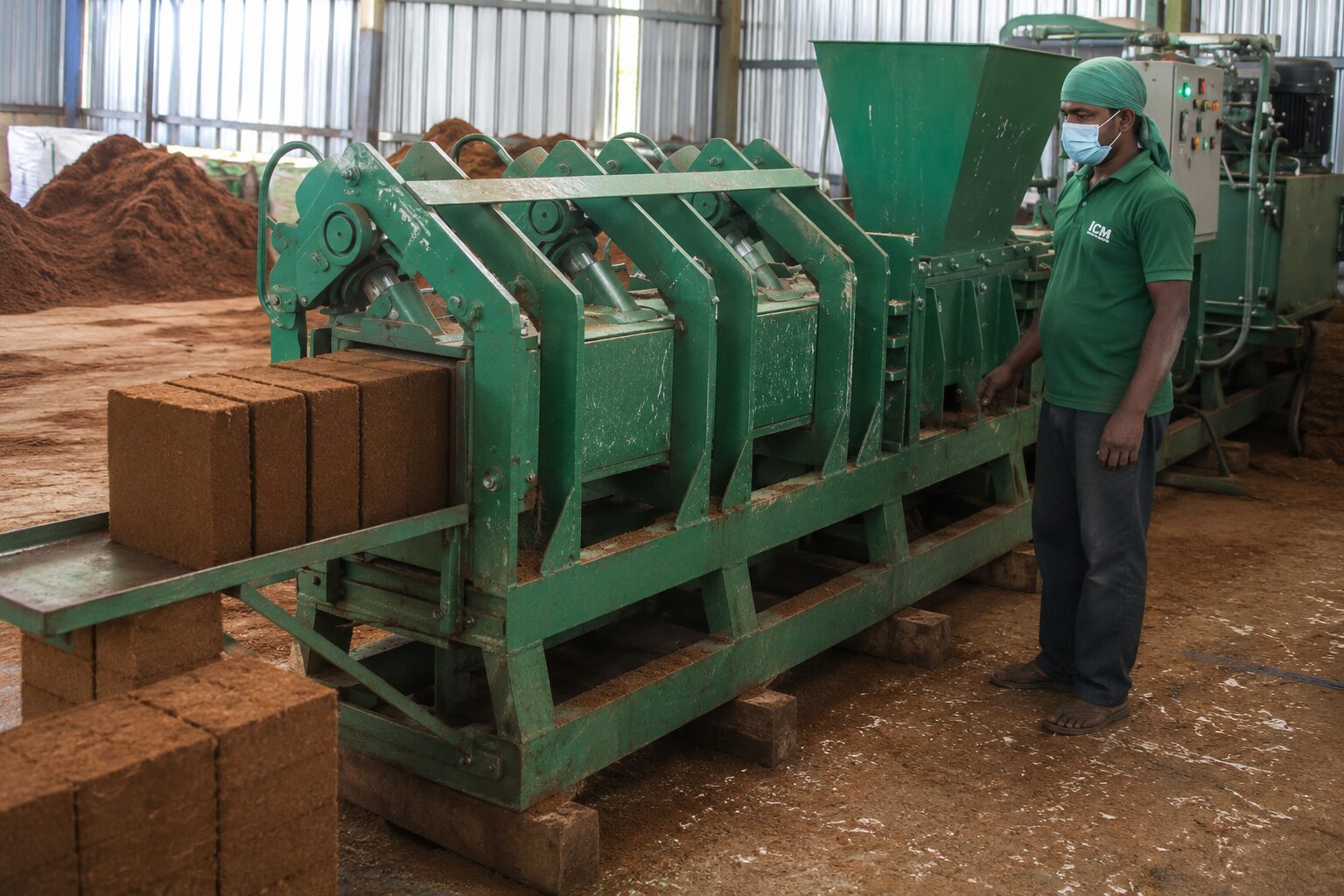
Compression
Dried, screened coco peat is compressed into blocks, bricks and grow bags using hydraulic compression equipment, with compression ratios maintained to match each product line's specification.
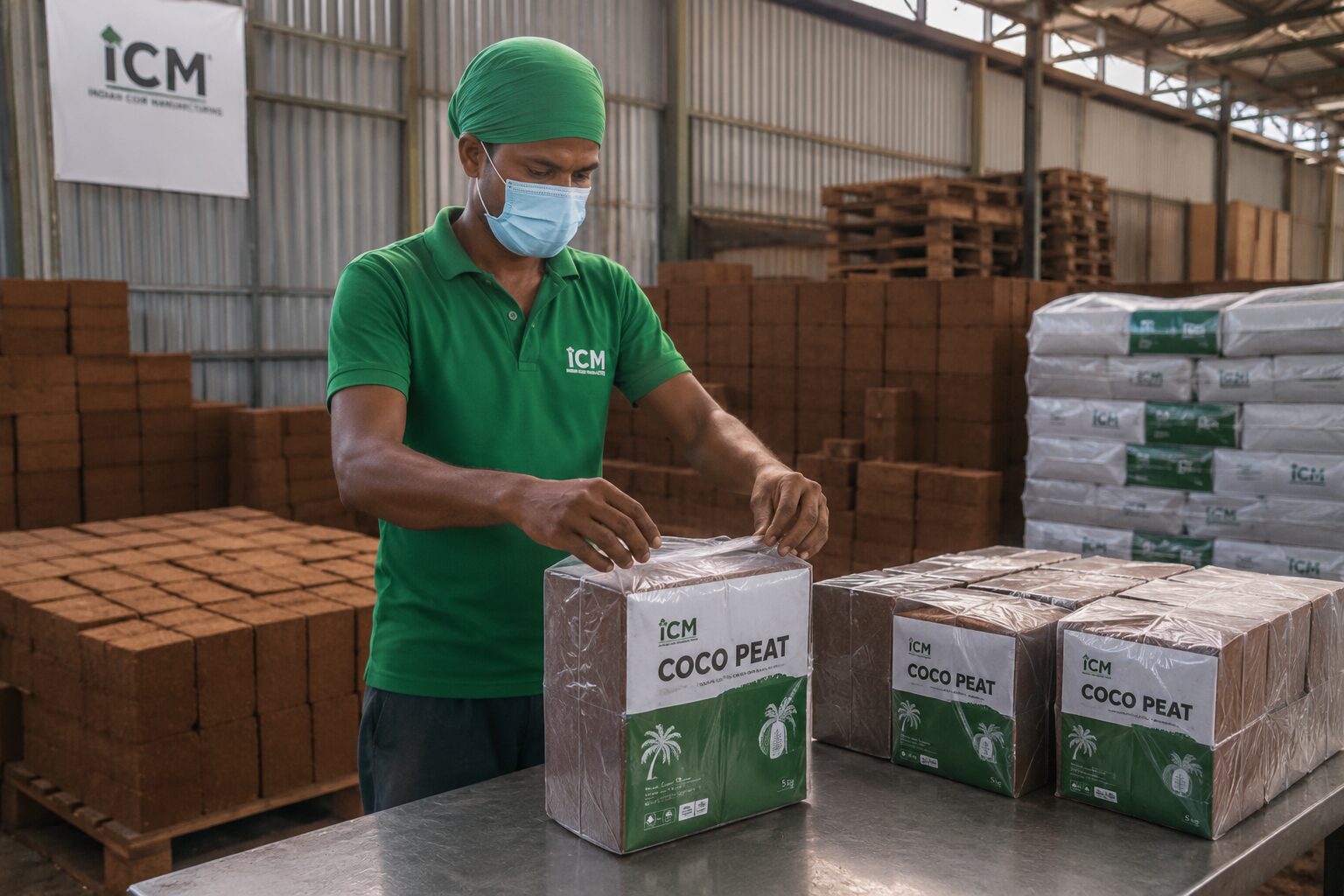
Packaging & Labelling
Compressed products are checked for weight and visual defects, then packed and labelled to each customer's requirement — whether that's primary, secondary or export-ready tertiary packaging.
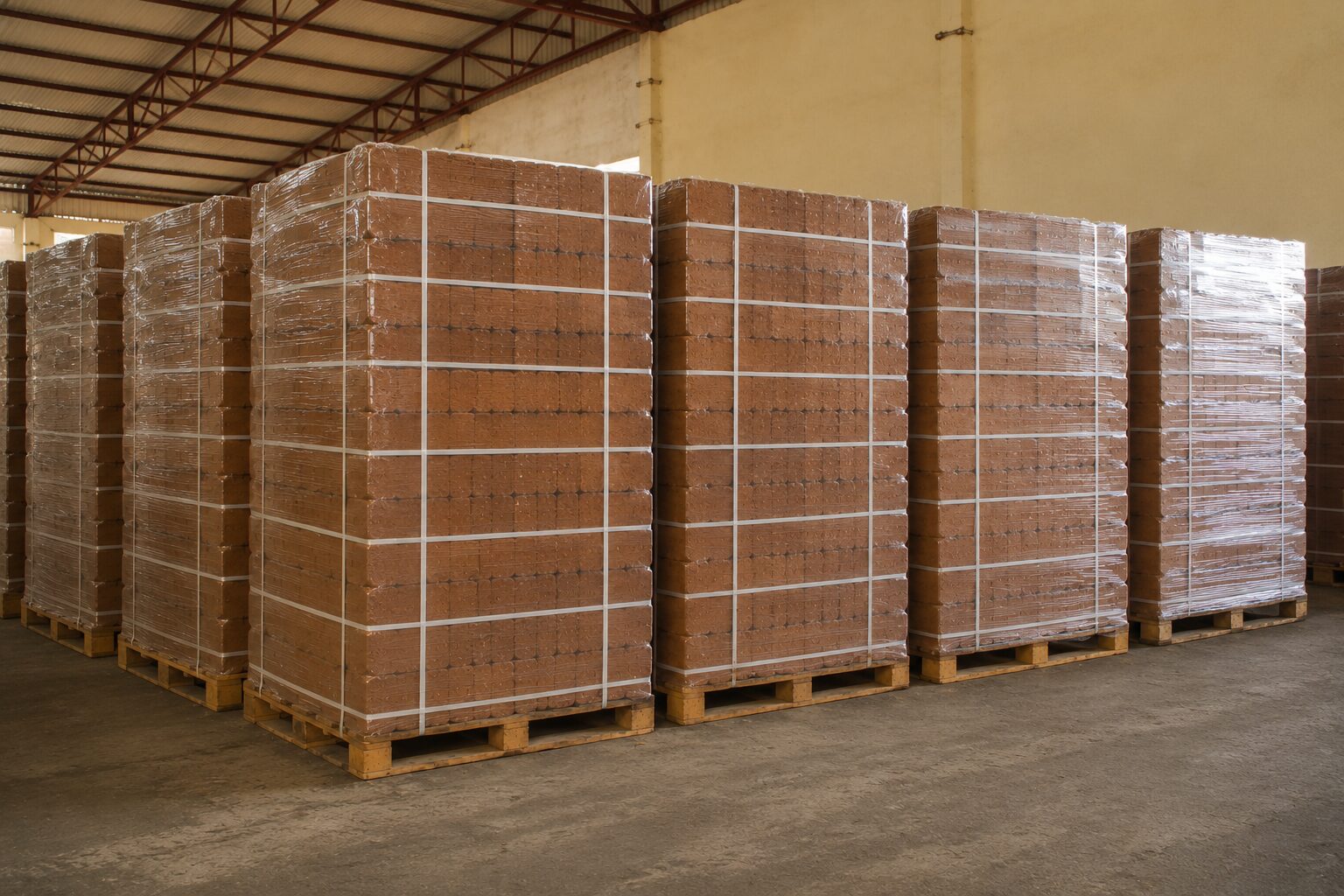
Palletizing
Packed goods are palletized to shipping standards, ready for loading — keeping cargo stable and protected in transit to the port and onward to the destination country.
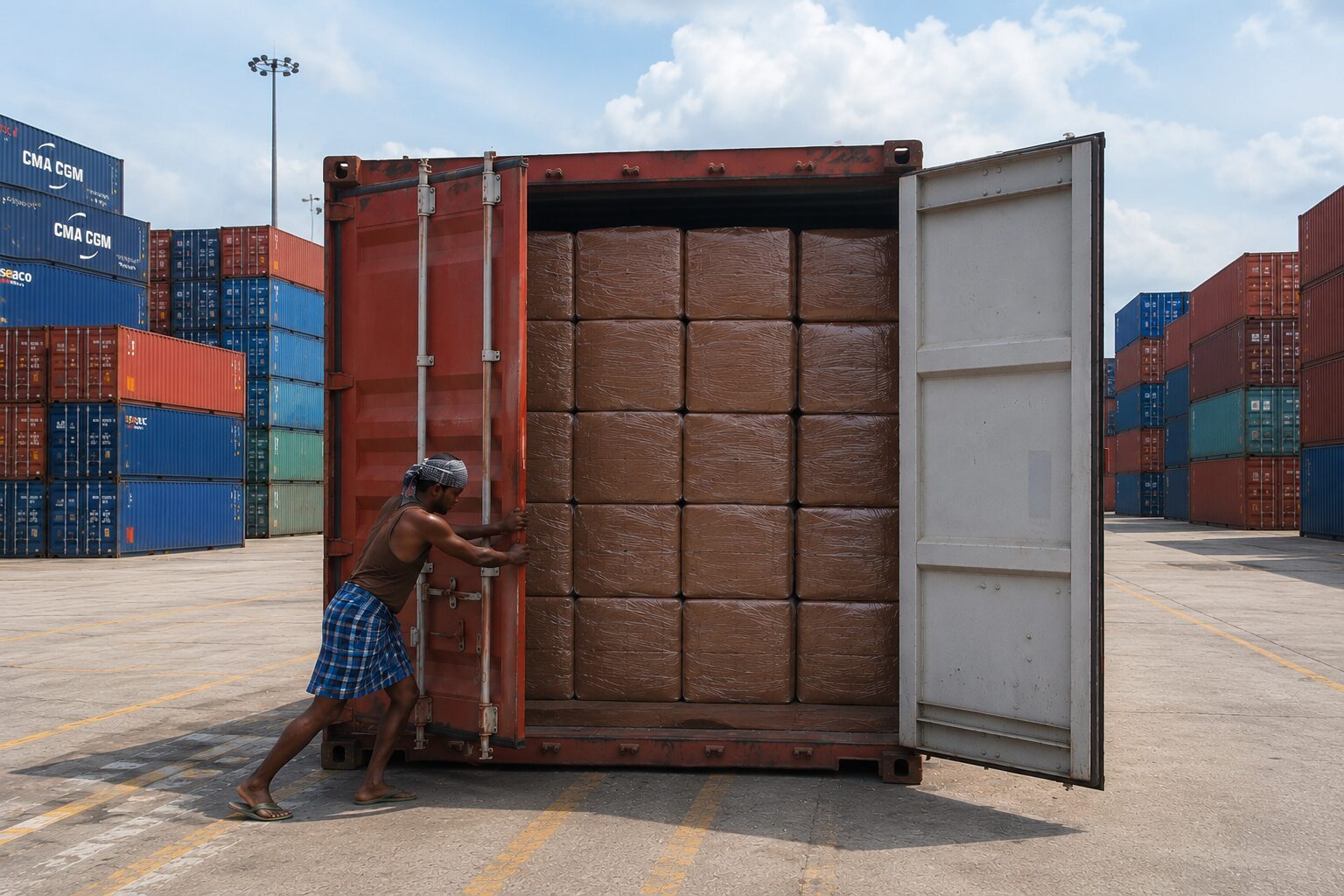
Shipping
Approved pallets are loaded and dispatched via established logistics partners to South Indian ports. We keep customers updated on shipment status through to vessel departure.